MS Dhoni And The Unheard Toss Story That Rocked 2011 World Cup Final – The 2011 World Cup Toss Controversy: A Look Back at the Dhoni-Sangakkara Moment
A Strange Case of Déjà Vu on the Cricket Field
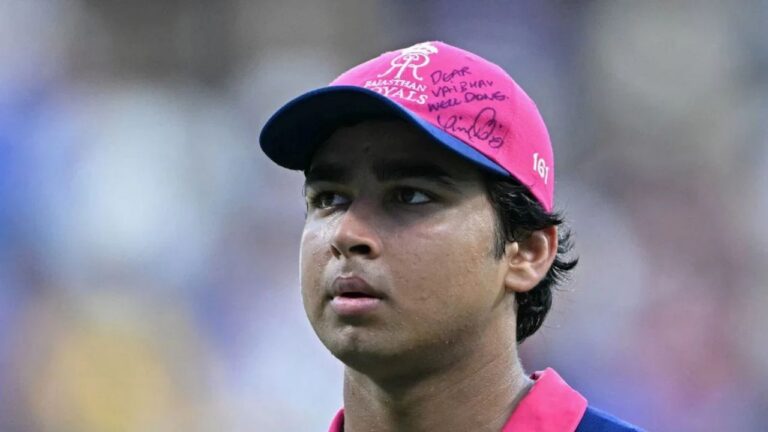
In the high-stakes world of professional cricket, where every marginal gain counts, the coin toss acts as the first tactical battle of the day. Recently, during the second qualifier of the IPL 2026 season in New Chandigarh, a peculiar incident occurred. Gujarat Titans skipper Shubman Gill spun the coin, while Rajasthan Royals captain Riyan Parag called heads. Though the coin appeared to land in the Royals’ favor, the match officials intervened, ordering a re-spin because Parag’s call was deemed not loud enough. This rare procedural hiccup instantly triggered memories of one of the most enigmatic moments in modern cricket history: the 2011 ICC Cricket World Cup final.
The 2011 Wankhede Incident: Dhoni vs. Sangakkara
Back on April 2, 2011, the atmosphere at Mumbai’s Wankhede Stadium was electric. The co-hosts, India, were preparing to face Sri Lanka in a match that would decide the fate of the trophy. Indian captain MS Dhoni and Sri Lankan skipper Kumar Sangakkara met in the middle, accompanied by veteran commentator Ravi Shastri, to conduct the toss.
As the coin hit the turf, it clearly landed on heads. However, a wave of confusion swept through the officials present. The match referee and umpires claimed that they had not heard Sangakkara’s call, leading to the unprecedented decision to declare the first toss null and void. The captains were forced to repeat the process. On the second attempt, Sangakkara once again called heads, and the coin favored him. He elected to bat first, setting the stage for what would become an iconic night of cricket.
The Uncanny Parallels in IPL 2026
The events at the Mullanpur Stadium in 2026 were strikingly similar. Just as they did in 2011, the officials demanded a re-spin due to a lack of audible clarity. The similarities extend beyond the mechanics of the toss; both events occurred in high-pressure knockout fixtures held on Indian soil. Furthermore, both instances featured Ravi Shastri at the center of the broadcast coverage, providing expert commentary on the confusion unfolding before him.
An interesting footnote to this narrative is that Kumar Sangakkara, who was the man caught in the middle of the 2011 confusion, now serves as the head coach of the Rajasthan Royals, the team involved in the 2026 incident. It appears that the specter of the ‘double toss’ has come full circle to visit him once more.
Legacy and the Result of 2011
While the double-toss controversy created a stir in 2011, it ultimately became a mere footnote in the annals of cricket history. India went on to win the match in emphatic fashion, chasing down the target with six wickets to spare. The defining image of that night was not the confusion at the toss, but rather MS Dhoni’s powerful lofted drive for six against Nuwan Kulasekara, sealing a historic victory that ended a 28-year wait for a World Cup title.
The IPL 2026 re-spin serves as a reminder that even in an era of ultra-high-definition cameras and precision officiating, the human element—and the occasional quirk of a coin toss—remains part of the game’s unpredictable charm. Whether it is an international final or a league qualifier, the toss remains a moment that can test the composure of even the most experienced captains.
Reflections on the Toss
Cricket is a game defined by pressure. When captains like Dhoni, Sangakkara, Gill, and Parag stand in the middle, they are already dealing with the weight of expectations from millions of fans. Having to repeat a process as simple as a coin toss adds an unnecessary layer of stress. Yet, looking back, these moments serve to humanize the legends of the game. They remind us that for all the strategy and preparation, cricket remains a sport where the unexpected is always just one coin flip away.

Related Articles